
Get a fast, highly accurate map of your heart's blockages. Dr. Anshu Kabra specializes in advanced Radial Angiography (via the wrist), ensuring a rapid, comfortable, and painless recovery.
Schedule an Angiogram
A coronary angiography is the gold standard for diagnosing blockages in the arteries supplying the heart. Dr. Kabra typically recommends this procedure if you are experiencing high-risk warning signs or irregular test results:
Experiencing recurrent angina (chest pressure or squeezing) that radiates to the jaw, neck, or arm, especially during physical activity.
If a treadmill stress test, ECG, or echocardiogram shows irregularities in your heart's rhythm or blood flow, an angiogram is needed to pinpoint the exact issue.
For patients who have recently survived a heart attack or are experiencing sudden, severe shortness of breath, an angiogram identifies the critical blockages immediately.
Traditionally, an angiogram involved threading a catheter through the femoral artery in the groin, requiring patients to lie flat for several hours to prevent heavy bleeding. Dr. Kabra is a recognized expert in Radial Angiography, performing the procedure through a small artery in your wrist.
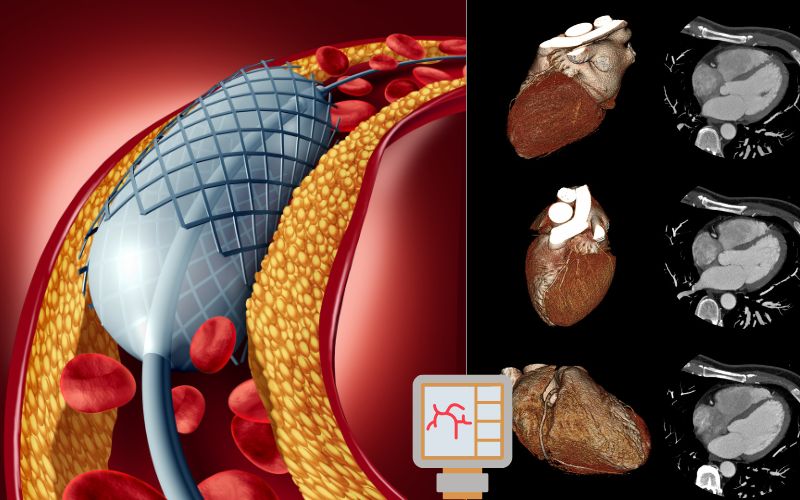
You remain awake and comfortable. Dr. Kabra numbs the small area on your wrist (radial artery) with a local anesthetic, ensuring the process is virtually painless.
A thin, highly flexible tube (catheter) is carefully guided up to your heart. A special, iodine-based contrast dye is then injected into the coronary arteries through the catheter.
As the dye flows, rapid X-ray images (fluoroscopy) capture detailed, real-time video of your blood vessels. This allows Dr. Kabra to see exactly where and how severe the blockages are, formulating a precise treatment plan.
An angiography is a delicate diagnostic procedure requiring a highly experienced hand to navigate the arteries safely and interpret the complex imaging accurately.
As an Additional Director of Cardiology at Narayana Hospital, Dr. Kabra has successfully performed over 20,000+ Coronary Angiographies. His profound expertise in the Radial approach ensures that you receive the most accurate diagnosis possible, with minimal discomfort and zero unnecessary hospital time.
"I was dreading the angiogram because I had heard horror stories about lying flat for 6 hours with a groin puncture. Dr. Kabra performed it through my wrist. It was painless, and I was sitting in a chair having tea an hour later. The best angiography specialist in Jaipur, hands down."
— Manish P., Jaipur"Dr. Kabra is incredibly thorough. He explained every step of the radial angiogram while it was happening on the screen. He found two severe blockages that were missed on a previous stress test. His accurate diagnosis saved me from a major heart attack."
— Ritu S., Vaishali NagarLeave your details below. Our clinic coordinator will contact you to arrange a priority consultation with Dr. Kabra.